Senior Care, AI & Real-Time Execution
AI Wearables Could Help Cardiologists See a Crisis Before It Happens
The next breakthrough in senior care may not be a bigger hospital. It may be a smarter home.
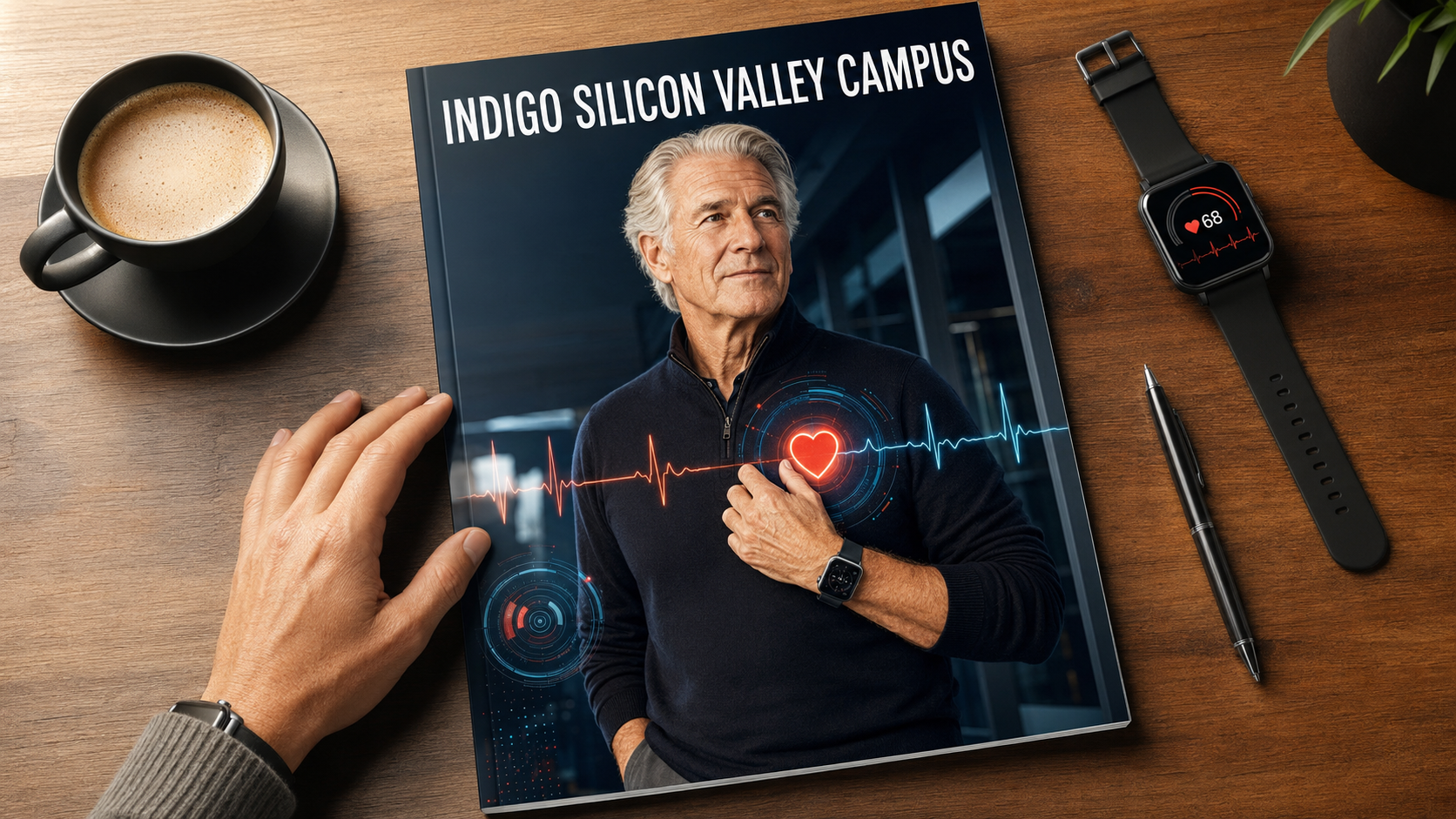
For most of modern medicine, cardiovascular care has been reactive.
A patient feels chest pain. A family member notices shortness of breath. A senior becomes dizzy or unusually tired. Then the healthcare system responds.
But by the time the symptoms are obvious, the body may have been signaling trouble for hours, days, or even weeks.
AI-enabled wearables could change that equation.
Smartwatches, adhesive biosensors and other connected devices can continuously collect information such as heart rate, heart rhythm, blood oxygen, activity, sleep patterns and other physiological signals. Artificial intelligence can help analyze those streams of information, identify meaningful changes and bring the right information to a clinician’s attention.
The goal is not simply to collect more data. It is to recognize deterioration earlier, while there is still time to act.
That is the promise of proactive care.
From a medical snapshot to a continuous signal
A traditional medical visit offers a snapshot. A wearable can help create a moving picture.
That distinction matters because cardiovascular problems do not always announce themselves during a scheduled appointment. A patient may look stable in the clinic but experience a meaningful change two days later while sleeping, walking to the kitchen or recovering at home.
Researchers at Cleveland Clinic are studying multimodal wearable sensors that combine several physiological data streams to detect subtle changes in cardiovascular function. The immediate research involves patients following congenital heart surgery, but the larger idea reaches much further: establish a patient’s normal pattern, then identify when that person begins to deviate from it.
Researchers hope this type of monitoring could help clinicians recognize decline one or two hours earlier than current downstream indicators allow. The long-term vision includes applying the same individualized approach outside the hospital. (Cleveland Clinic)
This is an important shift in how we think about healthcare.
The old model asks: What is wrong with the patient right now?
The emerging model asks: What is changing, and what might happen next?
The emerging model asks: What is changing, and what might happen next?
Why this matters for seniors
For older adults, the difference between those two questions can be life-changing.
Many seniors live with multiple chronic conditions. Their health can be influenced by medication adherence, mobility, hydration, sleep, stress, temperature and changes in daily activity. A single measurement may not reveal much. A pattern across several measurements may reveal that something is beginning to go wrong.
AI-assisted monitoring could help a care team notice that:
- A resident’s resting heart rate has shifted from their normal baseline.
- Their activity level has fallen sharply over several days.
- Their sleep, oxygen or heart-rhythm data suggests that a clinical review may be warranted.
- A person who says they feel “fine” is nevertheless showing a combination of changes that deserves attention.
Their sleep, oxygen or heart-rhythm data suggests that a clinical review may be warranted.
A person who says they feel “fine” is nevertheless showing a combination of changes that deserves attention.
Wearables do not replace cardiologists, nurses or caregivers. They can give those professionals a clearer and more timely signal.
That distinction is essential. AI should not become an automated diagnosis machine or an excuse to reduce human contact. Its strongest role is to help qualified people see emerging risk sooner, prioritize attention and make better-informed decisions.
There are still serious questions to solve, including clinical validation, false alarms, data privacy, cybersecurity, patient consent, equitable access and integration with existing healthcare workflows. A stream of alerts is not proactive care if nobody is responsible for reviewing and acting on them.
The technology only becomes valuable when the surrounding system is designed to respond.
What AI Wearables Have to Do With the Indigo Silicon Valley Campus
L&R Press is helping advance the Indigo Silicon Valley Campus as a regional demonstration project for technology-enabled housing offered at attainable rates.
The project begins with a simple belief: aging in place should not mean aging alone, aging invisibly or waiting for a preventable medical crisis.
We are assembling a multidisciplinary team of construction experts, architects, engineers, healthcare stakeholders and leading technology companies to rethink how seniors can live safely and independently in California. The objective is not to place a collection of gadgets inside an ordinary housing development. It is to build the housing, technology and operating model around the real needs of older adults.
AI-enabled wearables could become one part of that model.
Imagine a senior living in a thoughtfully designed, accessible home where approved wearable technology can help track relevant health trends. With the resident’s consent and appropriate medical oversight, meaningful changes could be routed to the right care partner. The environment could support mobility, social connection, telehealth and timely intervention while preserving the resident’s privacy and independence.
That is what aging in place with dignity can look like.
It also responds to a growing California emergency. Older Californians are the fastest-growing group of people experiencing homelessness. Between 2017 and 2021, California’s overall older-adult population grew 7 percent, while the number of people age 55 and older seeking homelessness services increased 84 percent. Older adults also represented 42 percent of the patients served by the street-medicine teams examined in a statewide landscape analysis. (California Health Care Foundation)
Housing, therefore, cannot be separated from health.
A senior who lacks stable housing is less able to charge a device, maintain an internet connection, store medication safely, attend virtual appointments or receive consistent follow-up. Technology alone cannot solve that. Housing alone may not solve it either.
The opportunity is to connect both.
The Indigo Silicon Valley Campus is being developed around this broader systems view. It is a chance to demonstrate how attainable housing, thoughtful design, preventative health technology and coordinated services can work together in one replicable model.
If successful, the lesson will not be that every senior needs the same wearable or the same monitoring plan. The lesson will be that senior housing can become a platform for safer, healthier and more independent living.
The Business Lesson: Real-Time Data Is Only Powerful When It Changes the Mission
The same principle applies inside a business.
Most companies do not suffer from a lack of data. They suffer from a lack of coordinated action.
The sales platform has one set of numbers. The project manager has another. Important decisions are buried inside meeting transcripts, email threads and personal notes. A leader announces a new priority on Tuesday, but the company continues operating from Monday’s plan.
That is the business equivalent of noticing the emergency after the symptoms become impossible to ignore.
L&R Press developed Real-Time Mission Management to help organizations operate more proactively.
Real-Time Mission Management is an AI-powered execution methodology that turns the information a business already produces into a continuously updated operating picture. It can capture decisions from meetings, identify changes in priorities, update milestones, surface blockers and clarify who is responsible for what happens next.
There is no need to force an entire team to abandon its current workflow. A company can continue conducting business as usual and provide the meeting transcripts and operational information needed to keep its mission current. The system is designed to strengthen execution without requiring access to employees’ private computer files or a disruptive company-wide software replacement.
Your business needs a baseline
A cardiologist cannot recognize a meaningful deviation without understanding what is normal for the patient. Your business is no different.
Your business is no different.
Real-Time Mission Management establishes a working baseline for your organization:
- What is the current mission?
- Which projects directly support it?
- What outcomes are expected?
- Who owns each priority?
- Which deadlines matter most?
- What is blocked?
- What changed during the latest meeting?
Who owns each priority?
Which deadlines matter most?
What is blocked?
What changed during the latest meeting?
Once that baseline exists, AI can help identify deviations before they become expensive.
A milestone slips. A client stops responding. A promised deliverable is discussed three times but never assigned. A new strategy conflicts with an older task. A compliance deadline approaches without a confirmed owner.
Individually, each signal may look small. Together, they can predict operational trouble.
Turn alerts into accountable action
The lesson from healthcare technology is clear: an alert has no value unless the right person receives it and the organization is prepared to respond.
The same is true in business.
Real-Time Mission Management helps move a company from passive reporting to active execution by connecting each signal to:
- A defined priority.
- An accountable owner.
- A deadline or decision point.
- A visible next action.
- A record of whether the issue was resolved.
A deadline or decision point.
A visible next action.
A record of whether the issue was resolved.
This is how an organization becomes proactive.
It does not wait for a missed launch to ask why the project was falling behind. It detects the pattern earlier.
It does not wait for a funder update to discover that three departments are using different numbers. It maintains a shared operational picture.
It does not leave the company’s strategy frozen in a presentation while the business changes around it. It updates the mission as new information arrives.
Build a business that can see around corners
AI wearables point toward a future in which health systems can recognize meaningful change sooner and help clinicians intervene before a problem becomes a crisis.
Real-Time Mission Management brings that same operating philosophy to business.
The competitive advantage is not having the most dashboards, the most software or the largest volume of data. It is knowing what changed, understanding why it matters and organizing the right response before momentum is lost.
That is the future L&R Press is building toward through the Indigo Silicon Valley Campus and through our work with businesses, institutions and mission-driven teams.
If your company is growing faster than its systems can keep up, L&R Press can help you build an AI-powered Real-Time Mission Management system that keeps your strategy, projects and team aligned as the business changes.
Learn how L&R Press can help your organization move from reactive management to real-time execution.
Move From Reactive Management to Real-Time Execution
Build an operating system that recognizes change early and organizes the right response.
L&R Press helps businesses, institutions and mission-driven organizations implement AI-powered Real-Time Mission Management systems that keep strategy, projects and teams aligned as conditions change.
Learn How L&R Press Can Help