CASE STUDY
Wendy’s Had the Data. It Just Didn’t See the Pattern.
How Real-Time Mission Management could have detected early warning signals and helped an iconic brand course-correct before hundreds of restaurants started closing.
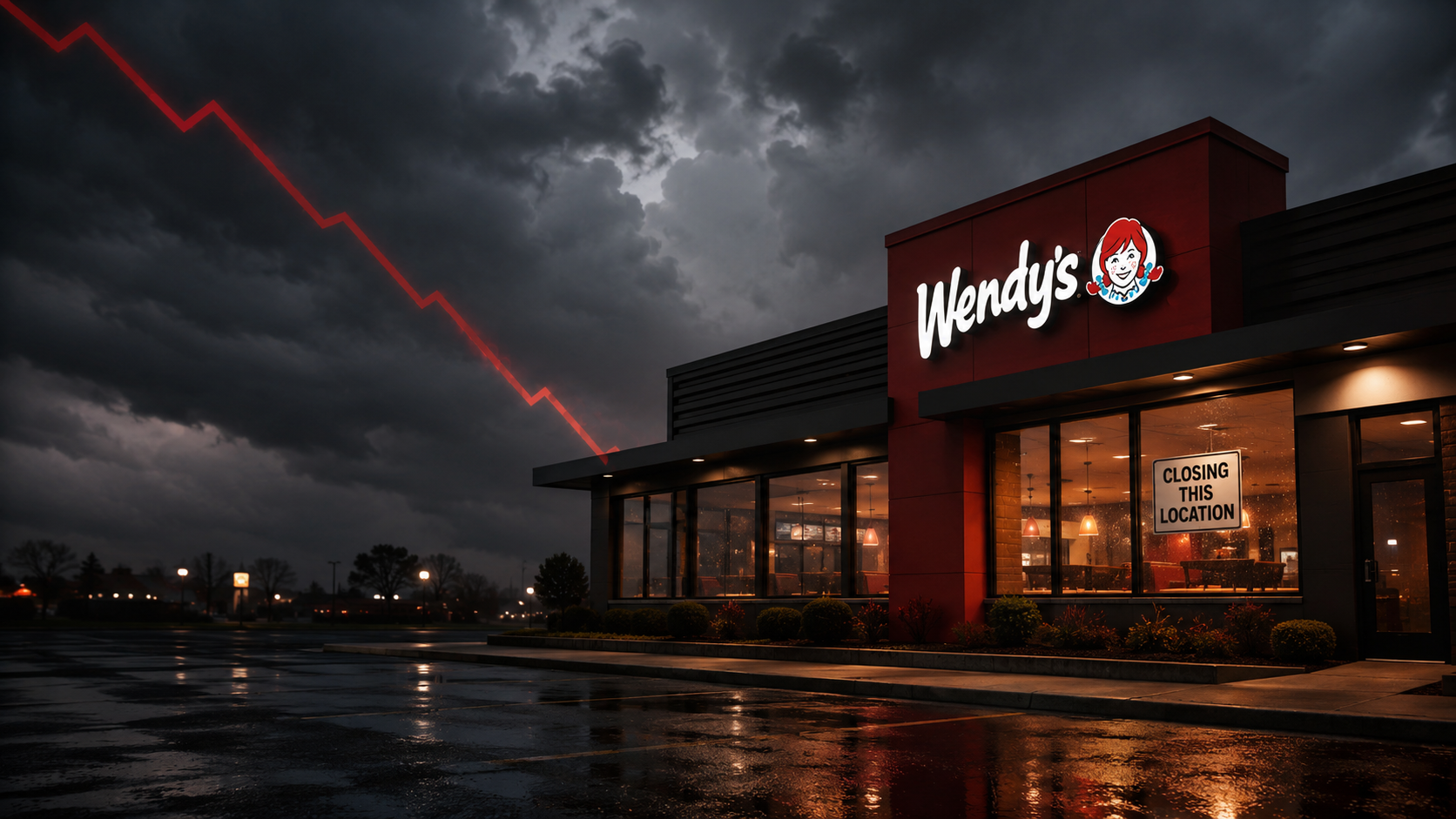
Wendy’s is not a small company that suddenly forgot how to sell hamburgers. It is a global brand with more than 7,000 restaurants, decades of consumer recognition and a franchise system capable of producing billions of dollars in annual sales. That is precisely why its recent contraction matters. Big organizations rarely fail because they possess no information. They struggle because the information arrives in different systems, at different speeds, under different owners, and without a shared mechanism that converts warning signs into coordinated action.
By the end of 2024, Wendy’s could point to a fourteenth consecutive year of same-restaurant sales growth. One year later, its U.S. same-restaurant sales had fallen 5.6 percent for 2025, including an 11.3 percent decline in the fourth quarter. In the first quarter of 2026, U.S. same-restaurant sales fell another 7.8 percent, U.S. systemwide sales declined 7.3 percent, company-operated restaurant margin contracted by 340 basis points, and the domestic restaurant count dropped sharply as the company accelerated its portfolio review.
By August 2026, public reporting indicated that Wendy’s had closed 289 U.S. restaurants during the first half of the year. The company had already told investors it expected to close roughly 5 to 6 percent of its U.S. system as part of Project Fresh, its turnaround and system-optimization plan. Store closures may ultimately improve the economics of the remaining system. But they are also the final, visible consequence of problems that generally develop much earlier: weakening traffic, inconsistent value perception, franchisee pressure, operating friction and a widening gap between what leadership intends and what customers experience.
The real Wendy’s case study is therefore not merely about restaurant closures. It is about visibility. What would have changed if every meaningful signal had been connected to a live operating mission before the decline became a turnaround?
The Invisible Problem: Signals Without Connection
Wendy’s public filings show that management already tracked the core measures one would expect from a sophisticated restaurant company, including same-restaurant sales, traffic, systemwide sales, restaurant profitability, operating margin and unit growth. The problem was not an absence of metrics. The harder problem was the distance between a metric changing and the organization aligning around what that change meant.
A national restaurant system produces warning signals every hour. Transaction counts weaken in one market. Digital orders are abandoned in another. Drive-through times rise during specific shifts. A franchisee delays equipment upgrades. Customer complaints cluster around order accuracy. A value promotion brings visits but fails to produce profitable repeat behavior. Labor and commodity inflation squeeze restaurant-level economics even when the average check rises.
Individually, each signal can look manageable. Collectively, they can reveal that the mission is moving off course. Yet the signals often live in separate dashboards, franchise reports, marketing summaries, customer-service queues, field-operations notes and executive presentations. A traditional reporting system can describe the past with impressive precision while still failing to organize the next move.
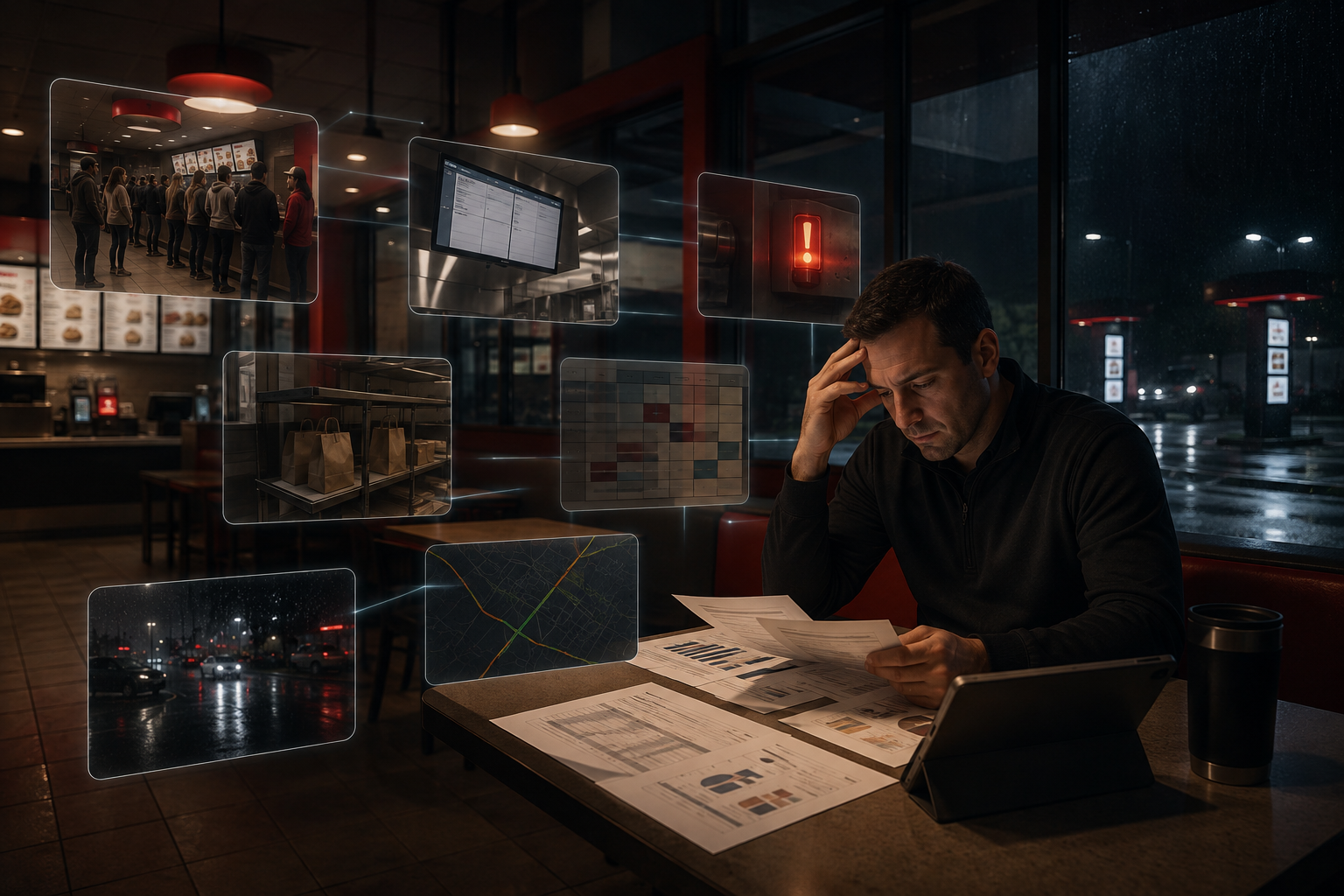
Wendy’s own explanation for the downturn illustrates this coordination problem. The company said U.S. same-restaurant sales declined primarily because of lower traffic, partly offset by a higher average check. It also cited commodity inflation, labor-rate inflation and weaker franchise economics. Management acknowledged that the brand had leaned too heavily on temporary price promotions instead of everyday value. These are not isolated observations. They are linked pieces of the same operating story.
A Dashboard Is Not Yet a Mission
Most large organizations already have dashboards. A dashboard might show that traffic is down, labor cost is up and franchisee profitability is deteriorating. But a dashboard does not necessarily identify which combination of signals should trigger an intervention, who owns the response, what decision is due next, or whether the chosen action is reversing the trend.
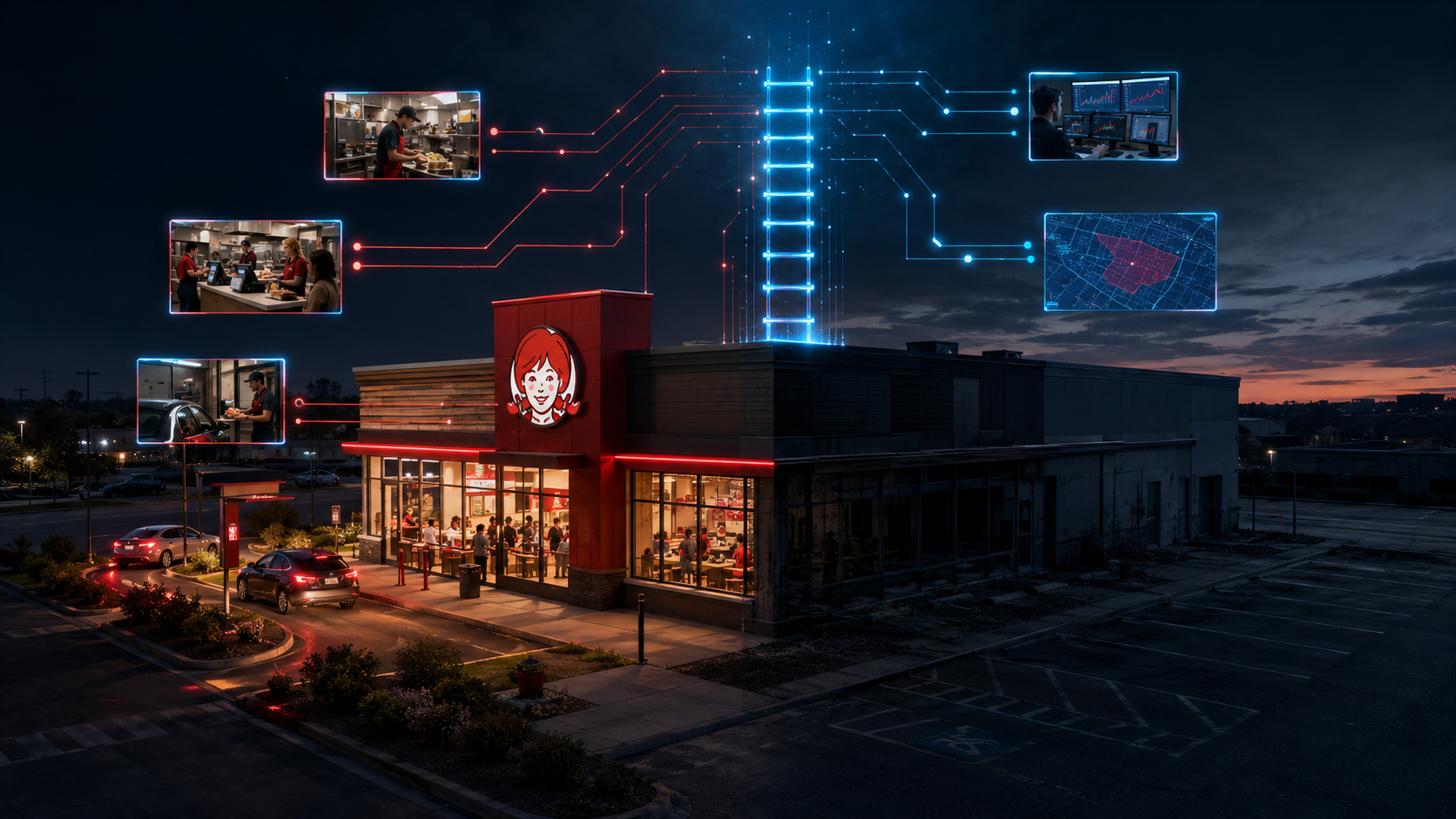
Real-Time Mission Management, or RTMM, is designed to close that gap. RTMM organizes a goal as a continuously updated Mission Ladder. The ladder connects the desired outcome to milestones, live evidence, risks, decisions, owners, deadlines, communications and next actions. Meetings and approved communications do not disappear into notes. They update the operating picture. When a signal changes, the mission changes with it.
Applied to Wendy’s, the central mission might have been stated plainly: restore sustainable U.S. traffic and franchisee profitability without weakening food quality, customer experience or long-term brand value. That mission would sit above a set of measurable ladders for value perception, restaurant operations, digital conversion, franchisee health, market-level traffic and capital improvement.
The distinction matters. If U.S. traffic falls while the average check rises, the system should not celebrate price realization without testing whether fewer customers are entering the funnel. If a limited-time offer creates a temporary bump but fails to improve repeat visits, the promotion should not be treated as a durable solution. If order accuracy improves but franchisee cash flow continues to deteriorate, the mission remains at risk.
What RTMM Could Have Detected Earlier
An RTMM system would not claim to predict the future with certainty. It would do something more practical: make patterns visible while leaders still have multiple options. The first pattern would have been the difference between check growth and traffic health. Wendy’s reported that lower U.S. traffic drove the first-quarter 2026 same-restaurant sales decline, even as higher average checks provided a partial offset. A Mission Ladder would flag that divergence as a customer-frequency risk rather than allowing revenue mix to blur the weakening visit count.
The second pattern would have been franchisee pressure. Roughly 95 percent of Wendy’s restaurants are franchised, which means system health depends on local operators having the economics and confidence to maintain standards, invest in equipment and execute brand programs. When labor costs, commodity costs, required capital and declining traffic converge, the result is not simply a finance problem. It becomes an operating-capacity problem that can affect staffing, service, restaurant condition and customer trust.
The third pattern would have been the value gap. Management later acknowledged that Wendy’s had moved too far toward limited-time price promotions instead of consistent everyday value. RTMM would connect promotion results to repeat visits, customer sentiment, restaurant margin and franchisee participation. The key question would not be whether a campaign generated activity. It would be whether the activity advanced the mission.
The fourth pattern would have been local variation. A national average can hide sharp differences among markets, dayparts and operators. RTMM would segment the system into intervention cohorts: restaurants suffering from demand weakness, restaurants constrained by operations, restaurants requiring capital improvements, and restaurants whose trade areas no longer support the economics. Closure would remain an option, but it would become the final branch of a documented intervention ladder rather than the first moment the public sees the problem.
The Wendy’s Mission Ladder
A practical RTMM response could have organized the turnaround into six connected stages. The stages are not a substitute for Wendy’s management judgment. They demonstrate how an enterprise can transform fragmented information into an operating cadence.
1. Establish real-time visibility
Create one mission view that combines traffic, same-restaurant sales, average check, restaurant margin, drive-through performance, order accuracy, digital conversion, customer sentiment, franchisee health and capital needs. Data should be visible by market, operator, restaurant cohort and daypart, not only as national averages.
2. Define intervention thresholds
Set specific conditions that automatically elevate a location or market. Examples could include consecutive traffic declines, deteriorating customer-experience scores, margin compression, unresolved equipment issues, abnormal digital abandonment or repeated franchisee support requests. Thresholds turn passive reporting into early-warning governance.
3. Assign cross-functional ownership
Connect each elevated signal to an accountable owner across operations, marketing, digital, finance, supply chain and franchise support. Every intervention should have a due date, evidence requirement and escalation path. The organization should be able to see when a problem is waiting on a decision rather than waiting for another report.
4. Test market-level responses
Run controlled interventions based on the diagnosed problem. A value-perception market may need a consistent everyday offer and clearer communication. An operations-constrained restaurant may need staffing, equipment or process support. A digital-friction cohort may require ordering-flow changes. RTMM would compare outcomes across cohorts and rapidly expand what works.
5. Track execution, not announcements
A turnaround plan is not complete when leadership announces it. It becomes real when restaurants execute it consistently and the customer responds. The Mission Ladder would track whether promised actions were delivered, whether field teams acknowledged them, whether operators completed them, and whether the underlying metric improved.
6. Course-correct continuously
If a response does not improve traffic, margin or customer experience within the defined window, the ladder changes. Resources shift, assumptions are challenged and the next intervention begins. Problems are allowed to remain small because the organization does not wait for a quarterly narrative to authorize movement.
What Might Have Changed
RTMM would not guarantee that every Wendy’s restaurant could or should remain open. Some locations may have structurally weak trade areas, obsolete facilities or economics that no reasonable intervention can repair. Responsible management sometimes requires closure. The better question is whether more locations could have been diagnosed sooner, improved faster or exited with less damage to franchisees, employees and surrounding markets.
With a live Mission Ladder, Wendy’s could have separated stores that needed capital from those that needed stronger operations, separated value problems from awareness problems, and separated temporary consumer pressure from persistent local weakness. Leadership could have compared interventions in near real time and placed resources behind the combinations producing measurable recovery.
The same system could also have preserved institutional memory. Wendy’s experienced leadership transitions while the U.S. business deteriorated. In a conventional organization, a change in leadership can interrupt priorities, reshape reporting and force teams to rebuild context. In RTMM, the mission, evidence, decisions, blockers and incomplete actions remain visible. A new executive inherits a live operating model rather than a stack of presentations.
The Lesson Is Bigger Than Wendy’s
Wendy’s is an especially visible example, but the underlying problem exists in companies of every size. The organization has goals. It has meetings about those goals. It has documents, dashboards, emails and people working hard. What it often lacks is a living system that continuously converts all of that activity into coordinated execution.
Artificial intelligence alone does not solve this problem. AI can summarize meetings, identify correlations and recommend actions, but those capabilities matter only when they are connected to an accountable operating structure. RTMM provides that structure. It gives AI a mission to support, evidence to evaluate, limits to respect and humans who remain responsible for decisions.
Wendy’s did not need more data. It needed the existing data, conversations and decisions to operate as one system. The warning signs were visible in retrospect. The competitive advantage would have been seeing the pattern while the company still had more time to act.
Turn Information Into Action Before the Damage Is Done
L&R Press uses Real-Time Mission Management to transform goals, meetings and operational signals into a continuously updated Mission Ladder. Organizations can see priorities, milestones, blockers, decisions and next actions in one live execution system.
Start your free initial Mission Ladder and see what your organization may be missing between the dashboard and the decision.
Sources and Methodology
This independent L&R Press case study relies on public information and presents a counterfactual management analysis. L&R Press has no access to Wendy’s private systems and does not claim that Wendy’s used RTMM. Wendy’s and its trademarks belong to their respective owners.